 systemread
Latest analysis
A closer look at the research shaping how AI interacts with the web.
How to Choose AI Context Under Tight Resource Limits
A wireless research framework offers a useful way to think about which inputs deserve space.
Read the analysisThe curated source for how the latest scientific research applies to Answer Engine Optimization, Context Engineering, and the Agentic Web. For marketers, independent researchers, and founders looking for an edge.
Explore the research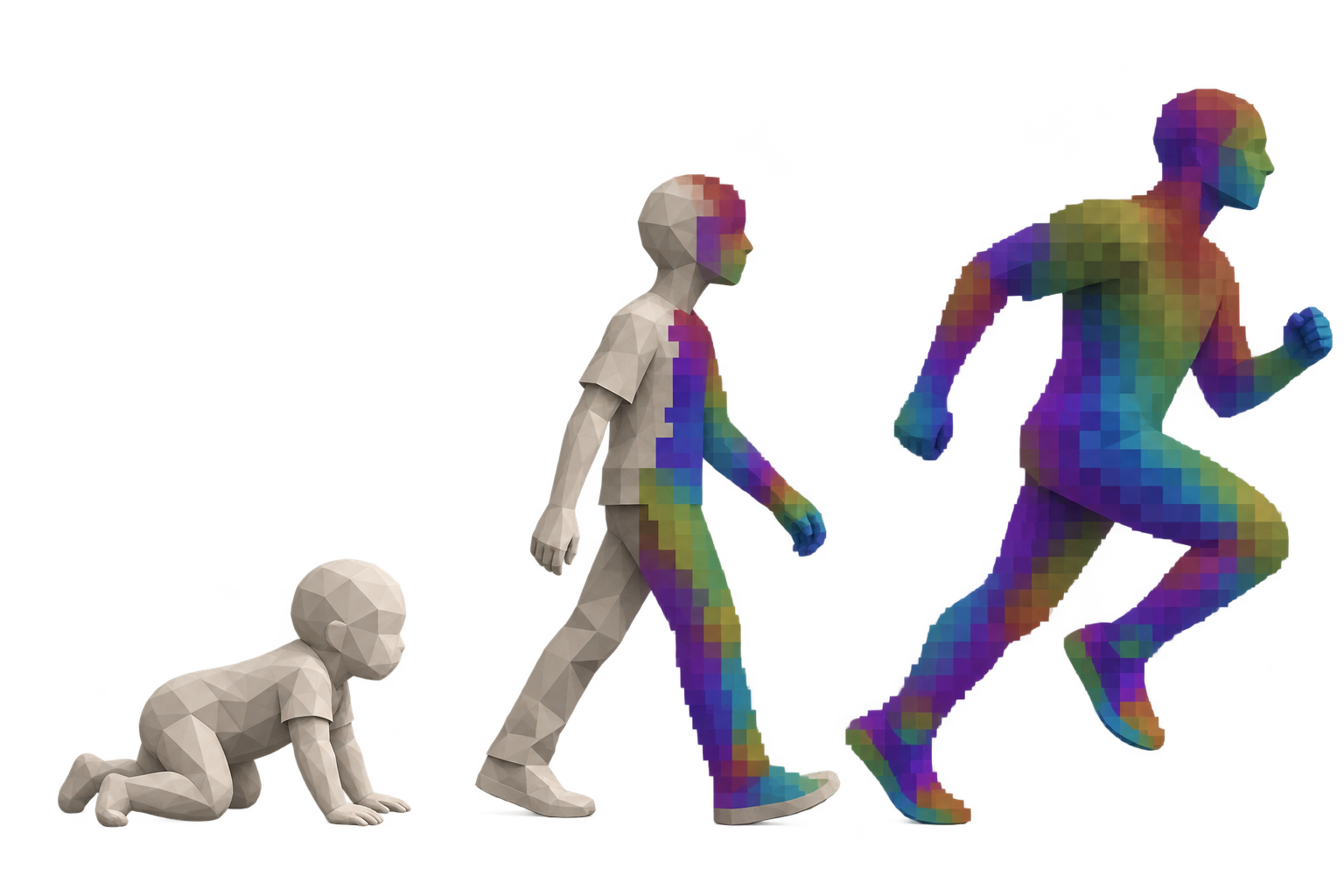
A closer look at the research shaping how AI interacts with the web.
A wireless research framework offers a useful way to think about which inputs deserve space.
Read the analysisA wireless research framework offers a useful way to think about which inputs deserve space.
A brand mention, a supporting citation and a customer conversion tell you different things.
Recent research exposes critical vulnerabilities in VLMs and multimodal agents that will reshape web architecture for the AI-first internet
New research reveals the structural patterns that make content visible to generative engines — from citation networks to vector-optimized chunking
New research reveals critical vulnerabilities and defense mechanisms for autonomous agents interacting with web content
New research reveals systematic vulnerabilities in AI agents' decision-making that could reshape web architecture security protocols
How alignment auditing, physical scene understanding, and formal verification shape the infrastructure of autonomous agent deployment
Empirical insights from 8 recent papers reveal systemic vulnerabilities in multi-component AI systems and emerging defense patterns for 2026's agent-dominated web
New research reveals critical vulnerabilities in AI agents' ability to distinguish genuine understanding from statistical mimicry — with implications for web content integrity
New research reveals how advances in multi-agent reasoning and visual understanding create novel attack surfaces for adversarial manipulation
New research reveals critical vulnerabilities in AI agents' web interaction capabilities and paths toward resilient architectures
New research reveals systematic vulnerabilities in AI agents consuming web content — and emerging strategies for hardening the attack surface
New frameworks emerge for validating synthetic content as generative AI mediates 40% of online communication
New research reveals critical vulnerabilities in AI agents navigating web content — and the defense mechanisms emerging from reinforcement learning
New research reveals fundamental gaps in how generative engines handle citations, with dependency reasoning accuracy as low as 1% in multi-entity scenarios
New research reveals the architectural patterns that make AI agents resilient to manipulation when navigating web environments
Cross-domain analysis reveals unexpected vulnerabilities as autonomous agents bridge pixels, tools, and web interactions
New research reveals fundamental vulnerabilities in multi-agent systems and web-interacting AI, with implications for content security and agent trust
New research reveals critical vulnerabilities and defense mechanisms as autonomous agents interact with web content at scale
From multi-round searches to single-query superintelligence — the architectural shift reshaping how agents consume knowledge
From V2X robot swarms to AI co-mathematicians, emerging agent architectures reveal fundamental vulnerabilities in distributed reasoning systems
New research reveals critical vulnerabilities in AI agent-web interactions and emerging defensive strategies
New research reveals critical vulnerabilities in AI agents processing web content — and the defensive architectures emerging to counter them
Empirical insights from 2026 research on safety-accuracy divergence, structured noise models, and the emerging threat landscape for autonomous web agents
New research exposes fundamental brittleness in how AI agents process web content, with implications for GEO optimization strategies
New research exposes systematic weaknesses in AI agent evaluation while proposing kernel-based and schema-agnostic solutions for robust defense
New research exposes latent vulnerabilities in LLM architectures through activation-level detection while synthetic environments enable scalable red-teaming
Examining the intersection of autonomous agents, visual-language models, and adversarial dynamics in web-scale deployments
How infinite-dimensional optimization principles from mathematics and physics reveal the hidden mechanics of AI retrieval systems
How Recent Advances in RAG Optimization, Detection Algorithms, and Multi-Agent Systems Reveal the Future of Content Discovery
Empirical evidence reveals fundamental shifts in how generative engines process, preserve, and prioritize cited sources
New research reveals critical vulnerabilities and defense mechanisms as autonomous agents interact with increasingly adversarial web content
New research reveals fundamental vulnerabilities in how AI agents process multimodal web content and temporal data streams
Examining the vulnerability landscape where generative engines meet adversarial web content through the lens of recent research
New research reveals fundamental vulnerabilities when AI systems interact with dynamic web environments
New research reveals fundamental weaknesses in how AI systems process web information, with implications for Generative Engine Optimization
From forensic detection to environmental control, new research reveals the emergent behaviors driving the Agentic Web
New research reveals critical vulnerabilities in AI agents' content understanding and the defensive architectures emerging to protect them
Cross-domain insights reveal emergent patterns in robustness, from quantum cages to urban vegetation modeling
New research reveals critical vulnerabilities and defensive strategies for AI agents navigating web content
New research reveals critical vulnerabilities in multimodal AI agents and proposes defensive architectures for the post-SEO internet
From static scrapers to reasoning agents: The architectural shift transforming web interaction
From personalized reward models to temporal network vulnerabilities — mapping the attack surface of autonomous web agents
How emerging research in autonomous agent evaluation, multimodal adaptation, and adversarial defense shapes the security architecture of AI-driven systems
New research reveals critical vulnerabilities and defense mechanisms as autonomous agents become primary web consumers
How citation architecture, hallucination mitigation, and semantic density reshape visibility in AI-powered search
How emerging research in adversarial attacks and multimodal AI reveals the security architecture for autonomous web agents
Recent research reveals critical vulnerabilities in AI agents processing web content, from token manipulation to cross-modal attacks
New research reveals fundamental vulnerabilities in how AI agents process and retrieve information from real-world digital environments
From gravitational wave degeneracy to neural interpretability — the mathematical foundations of semantic retrieval dominance
Emerging research reveals critical vulnerabilities and defense mechanisms as autonomous agents increasingly interact with untrusted web content
From LLM assessment frameworks to autonomous hardware optimization, the agent-first paradigm transforms how we architect computational systems
How emerging frameworks for autonomous agent control and systematic verification reshape web security in the post-ChatGPT era
New research reveals fundamental vulnerabilities in LLM architectures that demand a paradigm shift in defensive strategies
New research reveals critical vulnerabilities and defensive strategies as multimodal AI systems become primary web interaction interfaces
How breakthrough research in adversarial attacks reveals critical vulnerabilities in AI agents consuming web content
New research reveals critical vulnerabilities in vision-language models and proposes defensive architectures for reliable agent-web interactions
New research reveals architectural patterns that make AI agents more resistant to adversarial attacks when processing web content
New research reveals critical vulnerabilities in AI agent reasoning coherence and evaluation frameworks
How Recent Advances in Flow Matching, Ranking Feedback, and Semantic Grounding Shape Retrieval-Augmented Generation
From keyword matching to semantic synthesis — the architectural shift defining visibility in the Agentic Web
New research reveals emergent coordination strategies and safety frameworks for autonomous web agents navigating complex digital environments
Eight cutting-edge papers reveal the architectural principles that will determine content visibility in AI-synthesized search results
How systematic context optimization transforms AI systems from token processors into intelligent agents
How Recent Research in Spatial AI, Discrete Generation, and Multi-Modal Systems Reveals the Future of Content Discovery
System Readme is a research publication for marketers, independent researchers, and founders. We select scientific research and explain its practical applications across three subjects: Answer Engine Optimization—how information earns a place in AI answers; Context Engineering—how systems get the evidence and instructions they need; and the Agentic Web—how agents read, use, and act on the web.
Our automated research process draws on academic sources, including arXiv and Semantic Scholar. Articles are AI-generated syntheses with links to the underlying research. We distinguish measured findings from suggested experiments, explain study limitations, and date changing claims. A synthesis is a starting point for your judgment, not an independently replicated result.